

 Facebook
 X
X
 Pinterest
 Copy Link
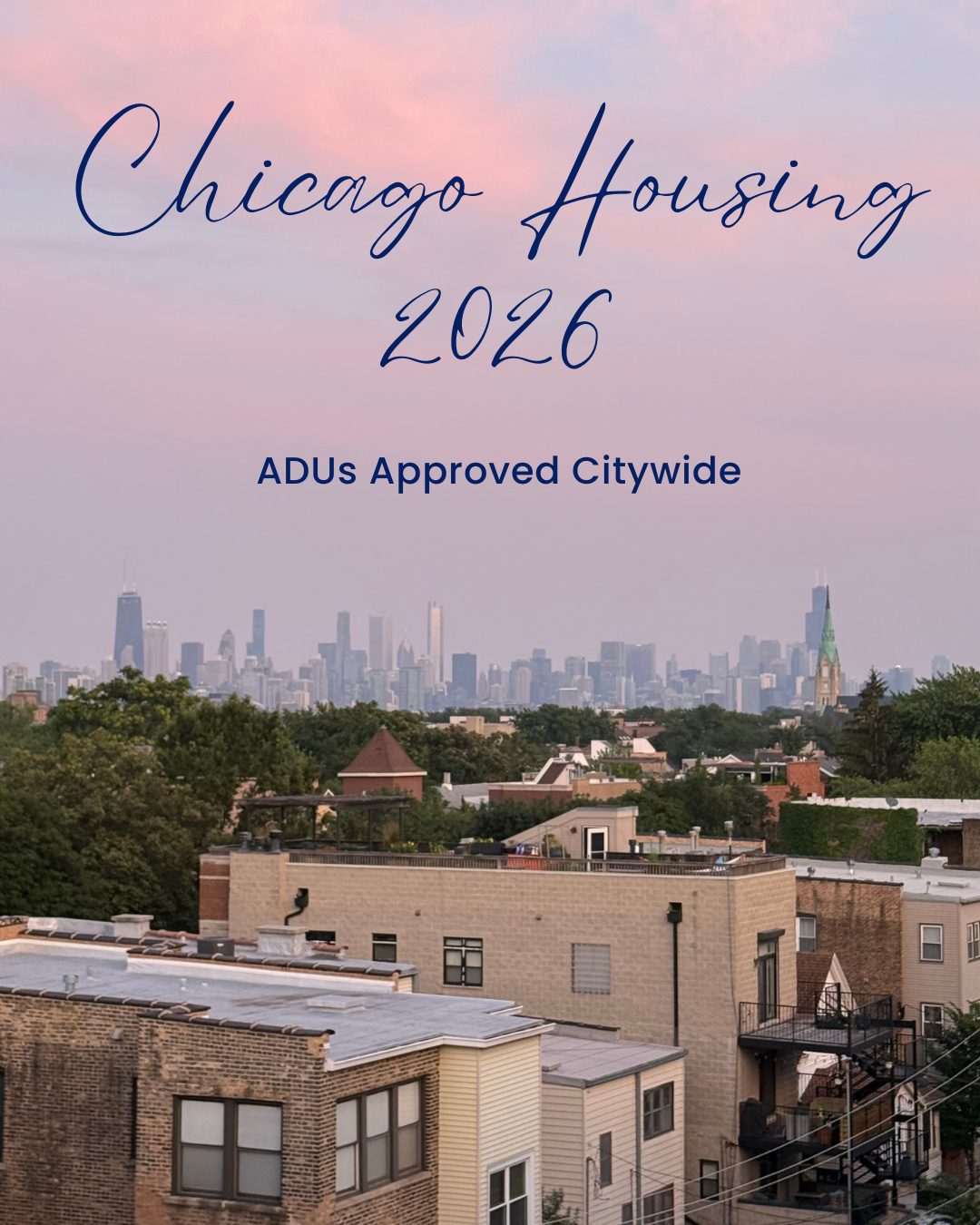
Chicago’s housing market is entering a new chapter. Starting April 1, 2026, the city will expand its Accessory Dwelling Unit (ADU) program citywide, giving homeowners more flexibility and creating new opportunities for buyers, sellers, and investors.
If you’ve been hearing the term “ADU” and wondering what it means for you, this guide explains what’s changing, why it matters, and how to plan ahead.
What Is an ADU—and Why Is Chicago Expanding Them?
An Accessory Dwelling Unit is a small, self-contained home located on the same lot as a primary residence. In Chicago, ADUs typically include:
- Garden units (basement apartments)
- Attic flats
- Coach houses (standalone structures behind the main home)
Chicago launched a pilot ADU program in 2021 in select zones. Now, after years of study and community feedback, the City Council voted to make ADUs permitted citywide starting April 1, 2026. Certain single-family (RS) districts will require aldermanic opt-in. However, overall, this is a major step toward adding gentle density and expanding housing options.
Why This Matters for Homeowners
For homeowners, ADUs represent flexibility and financial opportunity. For example:
- Rental Income: A well-designed ADU can generate steady cash flow, helping offset mortgage payments or fund renovations.
- Multi-Generational Living: Families can house aging parents or adult children nearby without leaving the neighborhood.
- Property Value: Adding an ADU can increase overall property value—though it’s important to weigh costs, zoning, and tax implications.
In addition, ADUs allow homeowners to make better use of existing space without leaving their community.
Key Details of the Citywide Expansion
Here’s what you need to know about the new rules:
- Effective Date: April 1, 2026
- Aldermanic Opt-In: Single-family RS districts require aldermanic approval for ADUs.
- Affordability Requirements: If you add multiple ADUs, some may need to be rented at affordable rates.
- Permit Limits: The city may cap the number of ADUs per block per year to manage growth.
- Design Standards: ADUs must meet building codes for safety, egress, and habitability.
As a result, planning early is essential if you want to take advantage of this opportunity.
Market Context: Why Timing Matters
Chicago’s housing market in late 2025 is defined by stability with nuance. Mortgage rates hover in the low-6% range, which is encouraging buyers to re-enter the market. Inventory remains tight in many neighborhoods. However, ADUs could gradually add rental options and influence pricing dynamics.
Importantly, Chicago continues to offer relative value compared to coastal metros, making it attractive for buyers and investors. Therefore, the ADU expansion won’t flood the market overnight, but it will create micro-level shifts in neighborhoods where homeowners act quickly to add units.
Planning Ahead: How I Help Clients Navigate ADUs
Adding an ADU isn’t just about pulling permits—it’s about smart design, compliance, and long-term value. That’s why I work with an experienced architect and general contractor team that specializes in:
- Renovations and new construction
- Multi-unit properties
- Accessory Dwelling Units (ADUs)
This partnership ensures that every project meets Chicago’s building codes, maximizes space, and delivers a finished product that adds real value. Whether you’re converting a basement into a garden unit or building a coach house, having the right team in place makes all the difference.
In addition, I can connect you with professionals who understand zoning, affordability requirements, and structural design—so your investment is both compliant and profitable.
Action Steps for Homeowners Considering an ADU
Even though the expansion begins in April 2026, you can start planning now. Here’s how:
- Check Zoning and Feasibility: Confirm your ward’s opt-in status for RS districts and review lot size and design constraints.
- Budget Realistically: Factor in egress windows, sprinklers (if required), insulation, soundproofing, and utility separation.
- Line Up Permitting and Trades: Expect a surge in demand for contractors around the effective date. Therefore, choose licensed teams experienced with ADU compliance.
- Plan for Taxes and Insurance: Improvements can affect assessed value. Talk with your tax professional and insurer about coverage and valuation implications.
What Buyers Should Know
ADUs aren’t just for current homeowners—they can influence buying decisions too. For example, purchasing a property with ADU potential can create long-term value. Buyers planning to house-hack or generate income should factor ADU feasibility into their search.
Neighborhood dynamics will also shift. Areas with strong ADU adoption may see evolving rental comps and property values.
Buyer Tips:
- Ask for micro-market comps—citywide averages won’t tell the full story.
- Verify zoning and lot constraints before assuming ADU potential.
- Consider financing options that allow for renovation or construction costs.
What Sellers Should Know
If you’re selling in 2026 or beyond, ADUs could impact your marketing strategy. Homes with existing ADUs or clear potential may command a premium. Highlight flexibility—multi-generational living, rental income, and creative use of space.
Seller Tips:
- If you have an ADU, showcase it with professional photos and floor plans.
- If your property has ADU potential, mention it in listing copy (without making speculative claims).
- Use Coldwell Banker’s Listing Concierge and Boost Ads to maximize exposure.
Neighborhood Signals—Where Interest Could Spike
While ADUs will be allowed citywide, some areas are likely to see faster adoption:
- North/Northwest Side: Historically strong permit activity during the pilot program.
- Transit-Served Corridors: Easy access to CTA and Metra remains a premium factor.
- Neighborhoods with Larger Lots: More space means easier compliance for coach houses.
FAQs—Straight Answers
Will adding an ADU guarantee higher property value?
Not automatically. Value depends on design quality, compliance, and neighborhood demand.
Are ADUs a “sure thing” for rental income?
They can be great, but success depends on location, finishes, and market conditions.
What about property taxes?
Improvements can affect assessed value. Understand your township’s cycle and appeal windows.
Do I need affordability compliance?
Only if you add multiple ADUs. Single-unit additions typically avoid affordability requirements.
Bottom Line
Chicago’s citywide ADU expansion is a game-changer. For homeowners, it’s a chance to unlock new income streams and adapt to changing family needs. For buyers, it’s an opportunity to future-proof your investment. For sellers, it’s a marketing edge in a competitive market.
The key is planning early—before April 2026 arrives and demand for contractors and permits spikes. And with the right team in place, you can turn underused space into long-term value.
Ready to Explore Your Options?
Whether you’re buying, selling, or considering an ADU, I’ll help you navigate the details and create a strategy that works for your goals.
Greg Smith | Coldwell Banker Realty
📞 773-951-6634
📧 Greg.Smith@cbexchange.com
🌐 SmithandStraton.com
